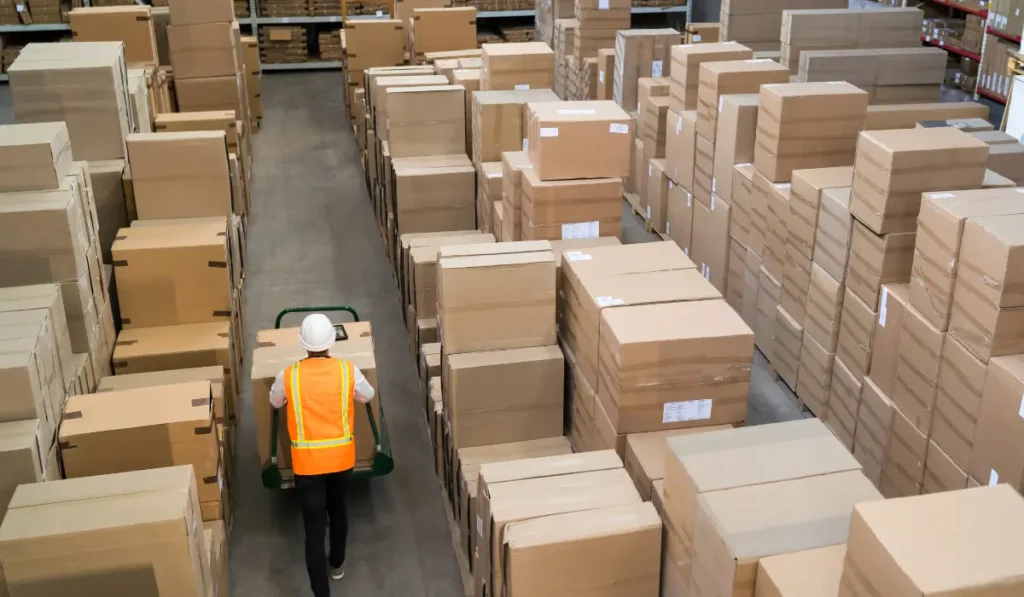
Amazon FBA can help sellers reach more customers, store inventory in Amazon fulfillment centers, and outsource much of the picking, packing, shipping, and customer service process. But when inventory stops moving, FBA can quickly become expensive.
Slow-moving products, customer returns, discontinued SKUs, private-label inventory, open-box units, and removed FBA stock can tie up cash and create storage pressure. For sellers with larger quantities, selling one unit at a time may not be practical anymore.
That is why many sellers look for ways to sell FBA inventory in bulk.
Bulk liquidation gives Amazon sellers a way to recover cash from inventory that is no longer working inside the FBA system. Instead of waiting for slow sales, paying storage fees, or spending more money on discounts and ads, sellers can move larger quantities to a buyer who understands overstock, returns, removals, and ecommerce inventory.
This guide explains what types of Amazon FBA inventory can be sold in bulk, when liquidation makes sense, and what sellers should prepare before contacting a buyer.
Why Amazon FBA Inventory Becomes a Problem
FBA inventory becomes a problem when the cost of holding it starts to outweigh the expected profit from selling it.
That can happen for many reasons:
- The listing does not rank well.
- Sales slow down after launch.
- Advertising costs become too high.
- A competitor lowers pricing.
- A product becomes seasonal.
- Reviews do not build fast enough.
- Demand changes.
- Packaging changes.
- A newer model replaces the old one.
- Inventory ages in Amazon fulfillment centers.
- The seller changes product categories.
- The seller exits the brand or niche.
Recent reporting has shown how aged inventory and storage-related costs can put pressure on small Amazon sellers when products sit too long in fulfillment centers. One Business Insider report described how unsold Amazon inventory over 180 days created escalating aged inventory costs for a seller and eventually led to removal decisions.
For many sellers, the issue is not whether the product has any value. The issue is whether it still makes sense to keep waiting.
What Does It Mean to Sell FBA Inventory in Bulk?
Selling FBA inventory in bulk means moving a larger quantity of products at once instead of selling them one by one through Amazon.
This inventory may be:
- Still inside Amazon FBA
- Removed from FBA and sent to your warehouse
- Stored at a 3PL
- Sitting in your garage or storage unit
- Returned from Amazon customers
- Overstock from an FBA launch
- Private-label inventory that did not sell
- Discontinued ecommerce products
A bulk buyer evaluates the lot based on product category, quantity, condition, packaging, demand, retail value, and location.
The offer may be lower than full retail price, but the advantage is speed, simplicity, and cash recovery.
For sellers with large quantities of slow-moving stock, working with Bulk FBA Inventory can be a practical way to explore bulk recovery instead of waiting for slow Amazon sell-through.
1. FBA Overstock Inventory
FBA overstock is one of the most common types of inventory that can be sold in bulk.
Overstock happens when a seller has more units than current demand can support. This may happen because the seller ordered too much, launched with an overly optimistic forecast, or saw demand drop unexpectedly.
FBA overstock may include:
- New products still in original packaging
- Extra units from a large supplier order
- Products that sold well at first but slowed down
- Inventory that became too expensive to advertise
- Products with too much competition
- Units that are taking too long to sell through
- Stock that is approaching aged inventory thresholds
Overstock is usually easier to evaluate when it is new, sealed, and organized by SKU or ASIN.
Bulk liquidation may make sense when storage fees, ads, discounts, and time are reducing profit.
2. Slow-Moving FBA Inventory
Slow-moving inventory is stock that sells, but not fast enough to justify the cost of holding it.
This can be dangerous because sellers often keep waiting for sales to improve. Meanwhile, the inventory keeps occupying space, tying up cash, and creating ongoing costs.
Slow-moving FBA inventory may include products that:
- Sell only a few units per month
- Have weak conversion rates
- Need constant PPC support
- Have poor organic ranking
- Face aggressive competitors
- Have low profit after fees
- Are bulky or costly to store
- Are no longer part of the seller’s long-term plan
If the product is not moving fast enough, sellers should calculate the true cost of keeping it.
Sometimes a bulk sale recovers more value than months of slow selling.
3. Amazon Customer Returns
Amazon customer returns can also be sold in bulk, especially when the seller receives removed or returned inventory from FBA.
Returns may include:
- Unopened customer returns
- Open-box products
- Damaged-box goods
- Used items
- Products missing accessories
- Products with damaged packaging
- Uninspected returns
- Mixed-condition return lots
Returns are often harder to manage than clean overstock because condition can vary. One unit may be new. Another may be open-box. Another may be incomplete.
If returns pile up, they can become difficult to sort, test, repackage, and relist.
Bulk liquidation may be useful when the cost of processing returns is higher than the expected resale value.
4. Open-Box FBA Inventory
Open-box inventory refers to products that are no longer sealed or cannot confidently be sold as brand-new.
Open-box units may come from:
- Customer returns
- Failed deliveries
- Damaged packaging
- Warehouse handling
- Inspection processes
- Marketplace removals
These products may still have value, but they often require a different resale strategy.
Open-box inventory can be difficult for Amazon sellers because listings must accurately represent product condition. If the seller does not want to manage condition grading, customer questions, returns, and potential complaints, bulk liquidation may be a better option.
Open-box FBA inventory is often a good candidate for bulk sale when quantities are high or condition is mixed.
5. Private-Label Inventory That Did Not Sell
Private-label sellers often place large supplier orders before they know whether a product will succeed.
If the launch does not work, the seller may be left with hundreds or thousands of units.
Private-label inventory may become difficult to sell when:
- The product did not rank
- Reviews did not build
- Ads became too expensive
- Competitors copied the product
- The seller chose the wrong niche
- Demand was overestimated
- Packaging or branding underperformed
- The seller is changing product categories
- The seller is exiting Amazon
Private-label inventory can often be sold in bulk if it is not restricted, expired, defective, or legally limited.
However, sellers should clearly disclose branding, packaging, trademarks, and any resale restrictions before selling the lot.
6. Discontinued SKUs
Discontinued SKUs are another strong candidate for bulk liquidation.
A product may be discontinued because:
- The seller is replacing it with a new version
- The supplier stopped producing it
- The seller is changing brands
- The product line is no longer profitable
- Packaging has changed
- The listing has been closed
- The category is no longer worth pursuing
Discontinued inventory may still have value, but it may no longer fit the seller’s strategy.
Instead of keeping discontinued products in storage, sellers can liquidate them and reinvest the cash into better-performing products.
7. Seasonal FBA Overstock
Seasonal FBA inventory can lose value quickly when the sales window closes.
Examples include:
- Holiday products
- Summer products
- Winter goods
- Back-to-school items
- Gift items
- Seasonal apparel
- Outdoor products
- Toys
- Party supplies
- Patio products
- Sports and recreation items
Seasonal products can be profitable when timing is right, but they become risky when inventory remains after demand drops.
A seller may choose to hold inventory until next year, but that means paying storage costs and risking packaging damage, trend changes, and lower demand.
Bulk liquidation may be better when the product is bulky, time-sensitive, or unlikely to sell profitably before the next season.
8. FBA Removals
FBA removals are products sellers request Amazon to remove from fulfillment centers.
Once inventory is removed, it may be sent to the seller, a warehouse, or another address. At that point, the seller still needs a plan.
Removed FBA inventory may include:
- Slow-moving products
- Aged inventory
- Customer returns
- Unsellable units
- Overstocks
- Discontinued SKUs
- Products that no longer fit the seller’s strategy
The mistake many sellers make is removing inventory without deciding what happens next.
If removed inventory arrives at your warehouse and sits there for months, the problem has only moved from Amazon’s warehouse to your own.
Before requesting removals, sellers should decide whether the inventory will be restocked, repaired, discounted, donated, disposed of, or sold in bulk.
9. Damaged-Box Inventory
Damaged-box inventory can still have resale value if the product inside is usable.
This inventory may come from:
- Amazon warehouse handling
- Customer returns
- Shipping damage
- Rejected deliveries
- Long-term storage
- Repackaging issues
Damaged-box products can be harder to sell as new, especially on Amazon. Customers may not accept damaged packaging, even when the product itself is fine.
If the seller has a large amount of damaged-box inventory, bulk liquidation can be more practical than repackaging each unit.
10. Mixed FBA Inventory Lots
Some sellers have mixed lots that include several inventory types.
A mixed FBA lot may include:
- Overstock
- Returns
- Open-box goods
- Damaged-box units
- Discontinued SKUs
- Private-label products
- Seasonal leftovers
- Removed inventory
Mixed lots can still be sold, but the buyer needs clear information.
Sellers should separate inventory by category and condition when possible. If the inventory is not sorted, say that clearly.
A mixed lot may still have value, but transparency is important.
When Should Sellers Sell FBA Inventory in Bulk?
Sellers should consider bulk liquidation when inventory is no longer moving profitably through Amazon.
Signs it may be time include:
- Storage fees are increasing
- Products are aging in FBA
- PPC spend is too high
- Sales are too slow
- The listing is suppressed or inactive
- Customer returns are piling up
- The product is discontinued
- The seller is changing niches
- Inventory is seasonal
- Removal orders have already been created
- Cash is needed for better products
The decision should be based on numbers, not emotion.
If holding inventory costs more than the expected recovery, liquidation may be the smarter move.
Bulk Liquidation vs. Discounting on Amazon
Discounting can work when inventory is still selling and the seller can protect margins.
But discounting is not always enough.
Discounting may fail when:
- Inventory quantity is too large
- Demand is weak
- The listing has low traffic
- PPC costs are high
- Competitors are undercutting pricing
- The product is out of season
- The inventory is open-box or returned
- The seller wants to protect brand pricing
Bulk liquidation can be better when speed matters more than waiting for individual sales.
Instead of managing coupons, ads, customer messages, returns, and fulfillment risk, the seller can move inventory in larger quantities and recover cash.
What Information Should Sellers Prepare?
Before contacting a buyer, prepare a simple inventory summary.
Useful details include:
- ASINs
- SKUs
- Product names
- Quantity by SKU
- Condition
- Retail price
- Cost, if available
- Photos
- Packaging condition
- Whether inventory is in FBA or removed
- Warehouse location
- Pallet count, if applicable
- Case pack details
- Expiration dates, if applicable
- Brand or resale restrictions
- Reason for selling
If inventory is still inside FBA, explain whether you plan to remove it or whether removal has already started.
If inventory is already at your warehouse, include pickup details.
What Types of FBA Inventory Are Harder to Sell?
Not every product is a good fit for bulk liquidation.
Some inventory may be difficult to sell if it is:
- Expired
- Restricted
- Recalled
- Hazardous
- Counterfeit
- Incomplete
- Legally restricted
- Heavily damaged
- Missing important parts
- Not allowed for resale
- Without clear product information
Sellers should be honest about product condition and restrictions. A serious buyer needs accurate details to evaluate the lot.
How to Maximize Recovery Value
To improve your chances of a strong evaluation:
- Act before inventory gets too old
- Organize by SKU or ASIN
- Separate new inventory from returns
- Take clear photos
- Provide condition notes
- Include quantity details
- Share retail value and category
- Be realistic about recovery value
- Explain resale restrictions
- Provide location and pickup information
The more organized the inventory, the faster a buyer can respond.
Final Thoughts
Many types of Amazon FBA inventory can be sold in bulk, including overstock, slow-moving products, customer returns, open-box goods, private-label inventory, discontinued SKUs, seasonal products, FBA removals, and damaged-box units.
The key is knowing when inventory is no longer worth holding.
If FBA stock is costing more in storage, advertising, removals, and time than it is likely to recover through Amazon sales, bulk liquidation may be the better path.
Selling in bulk can help Amazon sellers recover cash, clear space, and move on from inventory that is no longer working.
Ready to sell FBA inventory in bulk? Visit Bulk FBA Inventory to start turning slow-moving Amazon stock into cash.